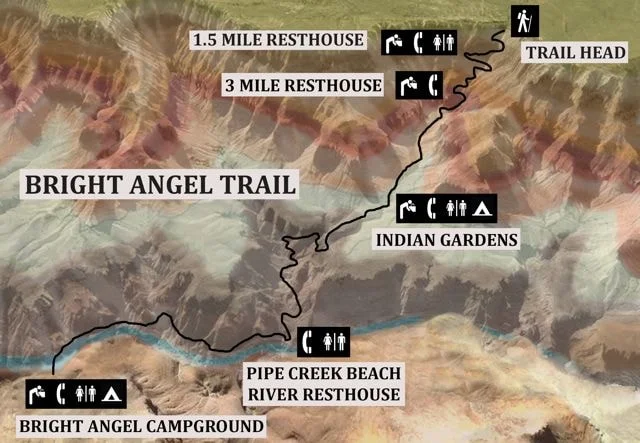
For many people, the most unforgettable moment of a Grand Canyon rafting trip doesn’t happen on the water.
It happens on foot.
The Bright Angel Trail plays a quiet but powerful role in many rafting adventures, serving as the hike-in or hike-out route for Upper and Lower Canyon trips. It’s the bridge between the world you know and the river journey that changes everything.
If you’re planning a rafting trip that involves this trail, here’s what it’s really like—and how to prepare for it.
Why the Bright Angel Trail Matters in Rafting Trips
Unlike full canyon rafting trips that start and end at road-accessible points, many rafting itineraries divide the canyon into sections. That’s where Bright Angel comes in.
- Hike-in: Some trips begin with a descent from the South Rim down to the Colorado River
- Hike-out: Others end with a climb back up to the rim after days on the water
Either way, this trail marks a transition—from modern life into canyon time, or from river rhythm back into the outside world.
What the Trail Is Really Like
Bright Angel Trail is often described as “well maintained,” which can be misleading. Yes, it’s clearly marked and historically engineered—but it is still a serious canyon hike.
The trail:
- Winds through layered rock formations
- Follows a steady, gradual grade
- Passes rest houses, shade pockets, and water stops (seasonal)
What makes it challenging isn’t technical difficulty—it’s distance and elevation change.
Depending on your route, you’re looking at roughly 7.5 to 9.5 miles with thousands of feet of elevation gain or loss.
Hike-In: Leaving the Rim Behind
If your rafting trip starts with a hike-in, Bright Angel becomes your introduction to the canyon.
The descent feels long but manageable. Packs are lighter than you’d expect—rafting outfitters handle the heavy gear. The biggest adjustment is mental: realizing how far down you’re going, and how quiet it becomes the farther you descend.
By the time you reach the river, the canyon no longer feels like something you’re visiting. It feels like something you’ve entered.
Hike-Out: The Final Test (and Final Reward)
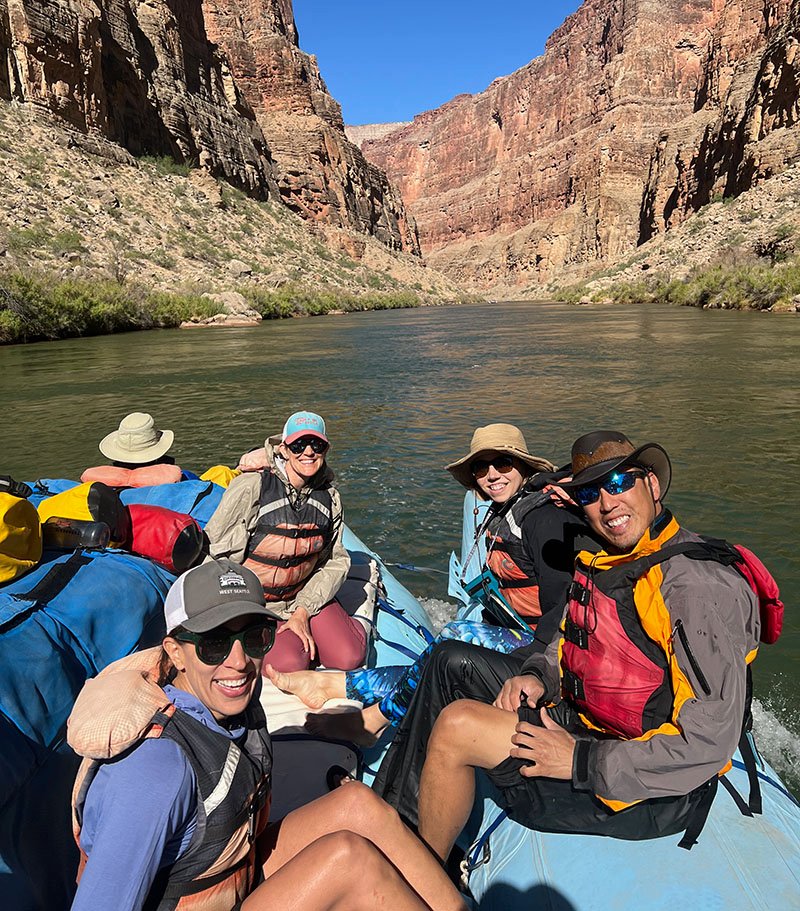
For many rafters, the hike-out is the most demanding part of the entire journey.
After days on the river—sleeping under stars, floating through silence, laughing through rapids—your legs have forgotten what sustained uphill movement feels like. The trail asks for patience, pacing, and respect.
But it also gives something back.
Each section climbed feels earned. Conversations get quieter. The canyon slowly opens behind you. Reaching the rim isn’t just the end of a hike—it’s the closing chapter of the adventure.
Many people say this moment stays with them longer than any rapid.
Do You Need to Be Super Fit?
No—but you do need to be prepared.
You don’t need to be an athlete. You do need:
- Comfortable hiking shoes
- Steady pacing
- Willingness to take breaks
- Respect for the canyon environment
Guides provide clear instructions, and most people complete the hike successfully by moving slowly and listening to their bodies.
What Most First-Timers Don’t Expect
A few honest surprises:
- Downhill is harder than it sounds (especially on the knees)
- Heat matters more than distance
- The trail feels longer at the end of a rafting trip—emotionally as much as physically
But also:
- The trail is incredibly scenic
- The sense of accomplishment is real
- The hike becomes part of the story you tell later
How This Fits Into the Bigger Rafting Experience
The Bright Angel Trail isn’t separate from the rafting trip—it completes it.
It frames the journey.
It slows you down.
It makes the river feel earned.
Walking in or out reminds you that this isn’t a theme-park experience. It’s a real passage through one of the world’s most powerful landscapes.
Final Thought
The Bright Angel Trail doesn’t exist to be rushed or conquered. It exists to be respected.
Whether you’re hiking down toward the river or climbing back up toward the rim, it serves as a quiet reminder: the Grand Canyon gives its greatest rewards to those willing to move through it one step at a time.
And by the time your boots touch the rim again, you’ll understand the canyon—and yourself—a little better.
Leave a Reply